COMICS · LESSON 3 OF 5
Design Your Hero Gadget!
Invent something wild that helps your hero solve a problem. Do not worry if the idea is possible or not.
- You need / Necesitas: your comic, pencil, and coloring supplies / tu cómic, lápiz y materiales para colorear
- Today you add / Hoy agregas: Page 2 / Página 2
O: Students will understand how clearly defined functions in technology can solve user needs.
D: Students will sketch and label a gadget for their hero, explaining its purpose, inputs, and outputs on a comic page.
A: Gadget -- a small mechanical or electronic device used for a specific function. Input -- a signal or action a device responds to. Output -- what the device produces or does.
Y: What makes a gadget truly “smart” for your hero’s mission?
S: TEKS §127.2(d)(3)(I) and §127.2(d)(4)(B)
Get inspired: superhero gadgets
Open the three examples. Each gadget solves a specific problem.
MOON GIRL'S INVENTIONS
Moon Girl combines tools such as a computerized utility belt, backpack, spring-powered boxing glove, and roller skates. Each invention helps her handle a different problem.
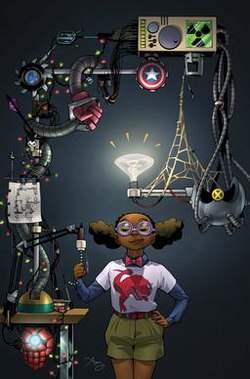
Marvel Comics character example.
BLACK PANTHER'S KIMOYO BEADS
Kimoyo beads can communicate, scan, and share information. Their function changes depending on the problem Black Panther needs to solve.
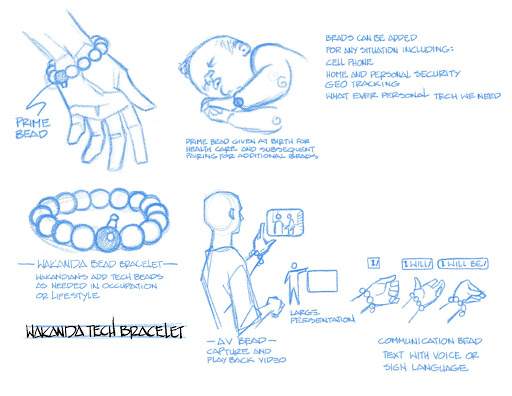
Marvel character technology example.
THE FLASH'S COSTUME RING
The Flash stores his costume in a ring so he can change quickly when trouble begins. One small gadget solves one clear problem.
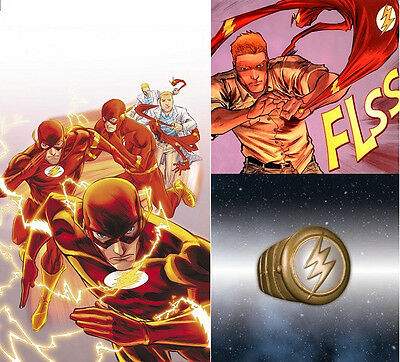
DC Comics character technology example.
Create Page 2
The sky is the limit: do not worry if your idea is possible or not. Show what the gadget does and which problem it solves.
Your page must include:
- Gadget name
- Purpose/function: What does it do?
- Drawing: Show what it looks like.
- Problem solved: Who or what does it help?
- At least one input or output: What does it respond to, or what happens?
Sentence stems
My gadget is called ____.
Its function is to ____.
The drawing shows ____.
It solves the problem of ____ by ____.
Input: ____ or Output: ____.
Student example: The drawing and comic panels show a gadget helping with a problem.
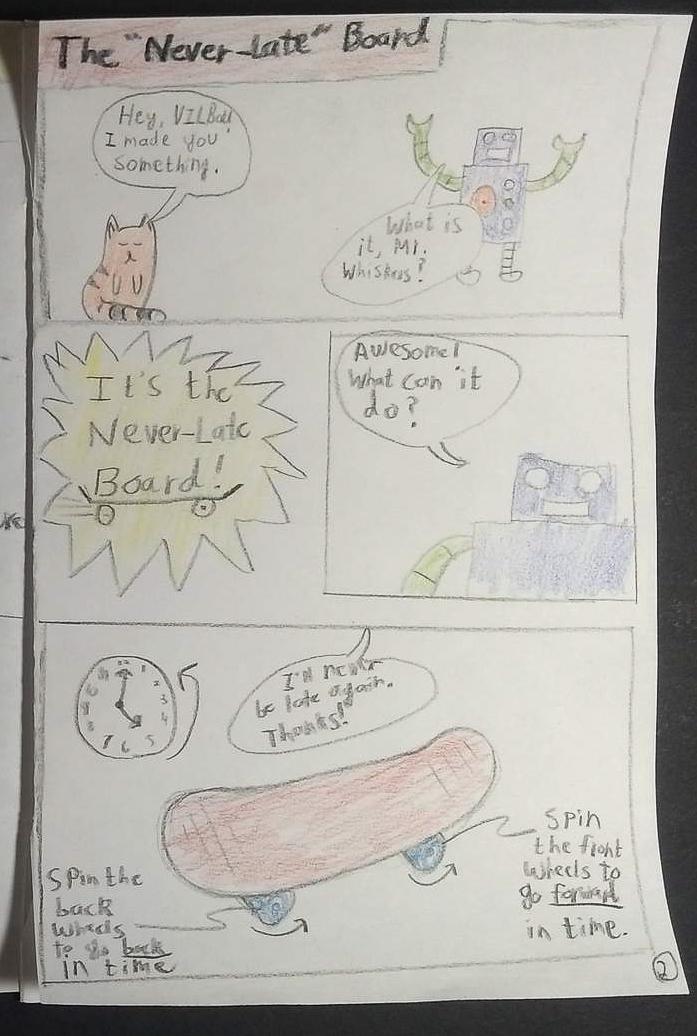
Input and output -- label at least one
Input: what starts the gadget or what it receives. Output: what the gadget does, shows, produces, or sends. Label at least one input or one output on your page. You do not need an if-then rule or a full system diagram.
Inspírate: gadgets de superhéroes
Abre los tres ejemplos. Cada gadget tiene una función clara: ayuda a alguien a hacer algo o resolver un problema.
LOS INVENTOS DE MOON GIRL
Moon Girl combina un cinturón computarizado, una mochila, un guante de boxeo con resorte y patines. Cada invento le ayuda con un problema diferente.
LAS CUENTAS KIMOYO DE BLACK PANTHER
Las cuentas Kimoyo pueden comunicar, escanear y compartir información. Su función cambia según el problema que Black Panther necesita resolver.
EL ANILLO DE TRAJE DE FLASH
Flash guarda su traje en un anillo para poder cambiarse rápidamente cuando comienza un problema. Un gadget pequeño resuelve un problema claro.
Crea la Página 2
El cielo es el límite: no te preocupes si tu idea es posible o no. Muestra qué hace el gadget y qué problema resuelve.
Tu página debe incluir:
- Nombre del gadget
- Propósito/función: ¿Qué hace?
- Dibujo: Muestra cómo se ve.
- Problema resuelto: ¿A quién o qué ayuda?
- Por lo menos una entrada o salida: ¿A qué responde o qué pasa?
Inicios de oración
Mi gadget se llama ____.
Su función es ____.
El dibujo muestra ____.
Resuelve el problema de ____ al ____.
Entrada: ____ o Salida: ____.
Ejemplo de estudiante: El dibujo y los paneles muestran un gadget ayudando con un problema.
Entrada y salida -- etiqueta por lo menos una
Entrada: lo que inicia el gadget o lo que recibe. Salida: lo que el gadget hace, muestra, produce o envía. Etiqueta por lo menos una entrada o una salida en tu página. No necesitas una regla si-entonces ni un diagrama completo.